You may have heard about the different types of tint. Let’s get to the bottom of “Which Tint is the Best”. There are three popular types of tint: Dyed Tint (also known as Standard), Metallic Tint, and Ceramic Tint. Understanding the differences between these popular options can make a significant difference in your vehicle’s comfort, style, and protection.
Each type has its own unique features, performance levels, and cost implications, so understanding these differences can help you make the best decision for your needs.
When choosing window tints for your vehicle, it’s best to understand how various tint percentages affect the look and performance of the tint. The most common window tint percentages include 30 percent ceramic tint, 5 percent tint, and 70 percent tint.
The choice depends on factors like desired privacy, heat rejection, and UV protection. Here’s an overview of the main types of window tints and how they compare to ceramic 70 tint and carbon window tint percentages.
Benefits of Car Window Tinting
- Heat Reduction: Keep your cabin cooler during hot days, reducing reliance on AC.
- UV Protection: Block up to 99% of harmful UV rays to protect your skin and interior surfaces.
- Privacy & Security: Darker tints provide discretion and deter theft.
- Glare Reduction: Improve visibility by reducing glare from the sun and headlights.
- Aesthetics: Add a sleek, custom look to your vehicle.
Understanding Different Types of Car Window Tint
|
Feature |
Dyed |
Ceramic |
Metallic |
|
Material Composition |
Dyed or Metalized Film |
Nano-Ceramic Particles |
Metalized Film |
|
Heat Rejection |
✔ (Moderate) |
✔✔✔ (High) |
✔✔ (Moderate to High) |
|
UV Protection |
✔ (Basic Protection) |
✔✔✔ (Up to 99%) |
✔✔ (Good Protection) |
|
Durability |
✔ (Can Fade or Bubble Over Time) |
✔✔✔ (Very Durable, Fade-Resistant) |
✔✔ (May Fade Over Time) |
|
Clarity and Aesthetics |
✔ (May Reduce Visibility) |
✔✔✔ (Excellent Clarity) |
✔✔ (Good Clarity with Glare) |
|
Electronic Signal Interference |
✔ (Possible with Metal Tints) |
✔✔✔ (No Interference) |
✔ (Can Interfere with Signals) |
|
Price |
✔ (More Affordable) |
✔✔✔ (More Expensive) |
✔✔ (Moderately Priced) |
Key Takeaways:
- Ceramic Window: offers the highest heat rejection and UV protection while maintaining excellent clarity and durability.
- Metallic Window: provides good heat rejection and UV protection, but may interfere with electronic signals.
- Standard Window: is typically the most affordable option, but lacks the durability and performance benefits of ceramic and metallic.
The Visual Differences between Dyed, Ceramic, and Metallic Tints
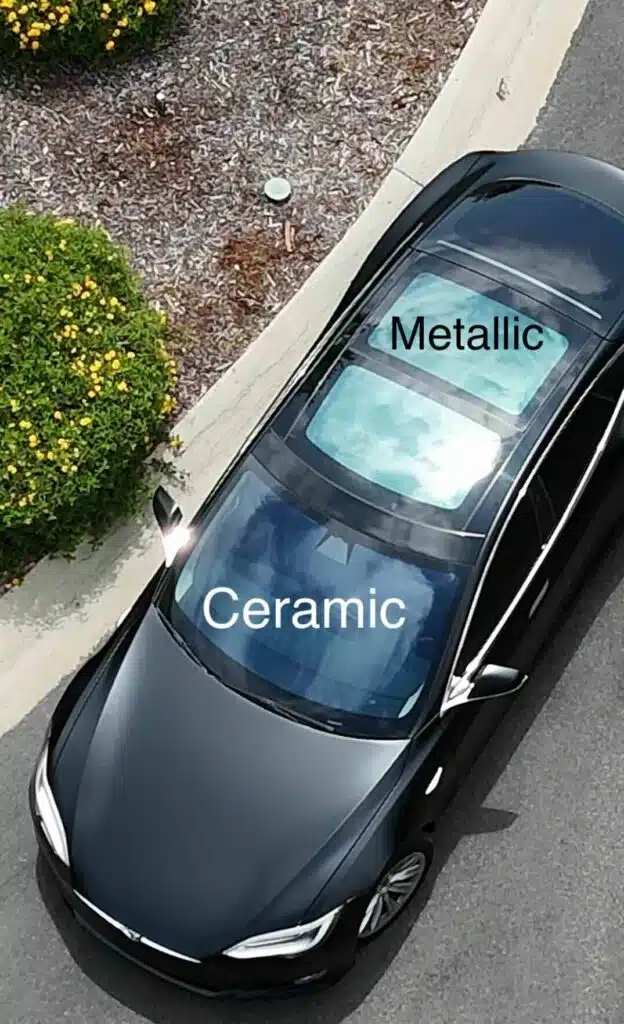
This Tesla Model S has Ceramic Tint on the Front windshield and windows in addition to the rear windshield. Metallic on the sunroof.
Metallic tint is reflective, whereas ceramic tint and dyed tint are darker in visual appearance.
|
Tint Type |
Description |
Visual Characteristics |
Common Uses |
|
Dyed |
Made by applying a dye to a layer of film. |
Typically darker, can look somewhat flat; may fade over time. |
Budget-friendly options, sedans, and standard vehicles. |
|
Metallic |
Contains metal particles that reflect light. |
Has a shiny or reflective appearance; can create a mirror-like effect. |
High-end vehicles and those seeking extra heat reduction. |
|
Ceramic |
Composed of nano-ceramic particles that do not contain metal. |
Offers a more transparent look; it can appear slightly darker without being reflective. |
Luxury cars, high-performance vehicles, and those seeking high UV protection. |
Applications and Recommendations
Ceramic: If you’re looking for the highest level of comfort, heat rejection, and UV protection, ceramic (sometimes called nano-ceramic) is the way to go. It’s perfect for people who drive in hot climates and want to keep their vehicle cool without compromising visibility or electronic performance.
However, caution is advised for Tesla sunroofs, where a very light ceramic tint or metallic tint is a better option to avoid heat buildup and glass cracking.
Standard (Dyed): If you’re looking for an affordable solution that provides privacy and UV protection without a large investment, dyed tint may be a good option. However, it’s best for drivers in moderate climates where heat rejection isn’t a top priority.
Metallic: For those who want enhanced heat rejection and don’t mind a reflective finish, metallic tint offers a durable, long-lasting solution. It’s a great choice for vehicles that spend a lot of time in sunny climates, though it may interfere with electronic signals in some vehicles. Metallic tint is also recommended for Tesla sunroofs due to its superior reflectivity.
What is Legal Tint in California?
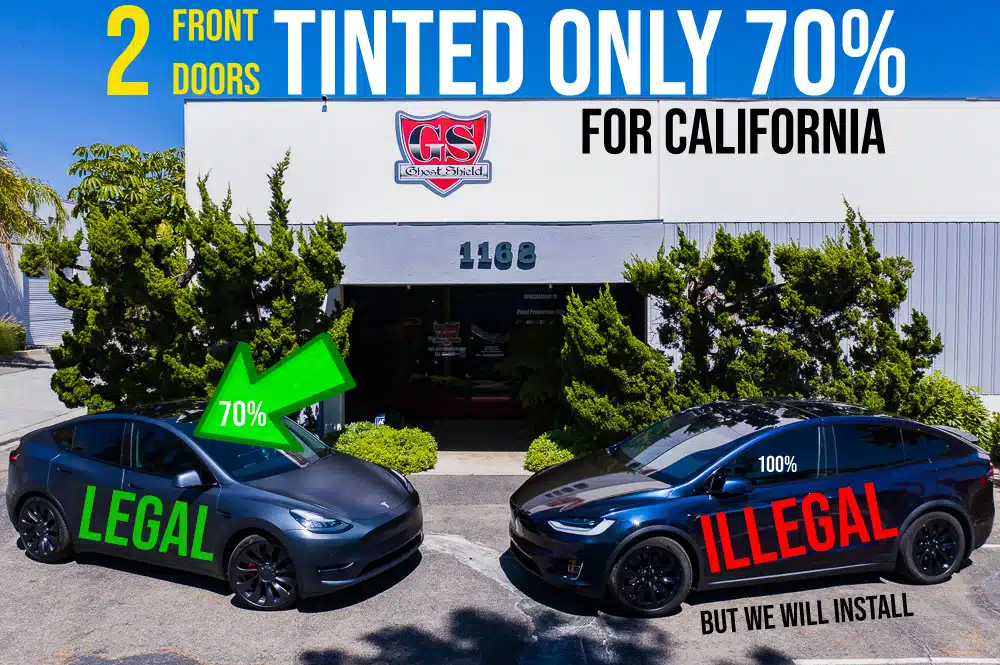
In California, the rear two doors and the rear glass can be any percentage that you want. The front two doors on a vehicle can legally be tinted only 70%.
Windshields are illegal at any shade, but many people will often tint the front windshield at 70% for heat rejection.
Pro Tip: 70% is nearly clear and does little to change the look of the glass, making it hard to tell the window is tinted, but still offering heat rejection.
This is the most popular Tint shade in California: 70% Tint on the front two windows and 5% Tint on the rear window and windshield.
|
Window Location |
Standard |
Ceramic |
Metallic |
|
Windshield |
N/A (Not typically tinted) |
70% |
70% |
|
Front Windows |
35% |
30% |
20% |
|
Back Windows |
20% |
20% |
5% |
Can I Tint My Front Windshield In California?
Legally speaking, no. Front Windshield tint is illegal in California. However, many who get 70 tint or 50 tint on the front never have issues with law enforcement. So you are only likely to get into trouble if it’s noticeably darker.
How Much Does Window Tint Cost?
This depends on factors such as:
|
Factor |
Description |
Impact on Price |
|
Type of Tint |
Different types of tint (Dyed, Metallic, Ceramic) vary in price. |
Higher quality tints (like Ceramic) generally cost more. |
|
Vehicle Size |
Standard cars vs. larger vehicles (SUVs, vans) require more material. |
Prices increase with larger vehicle sizes. |
|
Number of Windows |
More windows mean more labor and materials. |
Increased cost for additional windows. |
|
Labor Costs |
Installation expertise and time required can vary. |
Professional installation may add to the overall cost. |
|
Geographic Location |
Prices can vary based on regional market rates. |
Higher demand areas may have higher prices. |
|
Additional Services |
Services like removal of old tint, cleaning, or warranty options. |
Extra services can increase the overall price. |
|
Promotions and Discounts |
Seasonal promotions or package deals may be available. |
Discounts can lower the final price. |
Window Tint Ball Park Figures:
|
Type of Tint |
Ballpark Figures ($) |
Most Used Applications |
|
Standard (Dyed) Tint |
$100–$300 |
Residential, budget-friendly automotive, privacy for personal vehicles, and Tesla/Glass Roof |
|
Metallic Tint |
$200–$500 |
Automotive (SUVs, trucks), commercial buildings, enhanced privacy and glare reduction, and Tesla/Glass Roof |
|
Ceramic Tint |
$400–$800+ |
High-end automotive, luxury vehicles, and residential applications seeking maximum heat rejection and UV protection |
Installation and Quality Guarantee
At Ghost Shield, all window tints are installed by award-winning professionals in a clean, controlled environment. We back our services with a lifetime installation warranty for confidence and long-term performance.
Learn more about our installation process
Does Window Dark Tint Affect Visibility at Night?
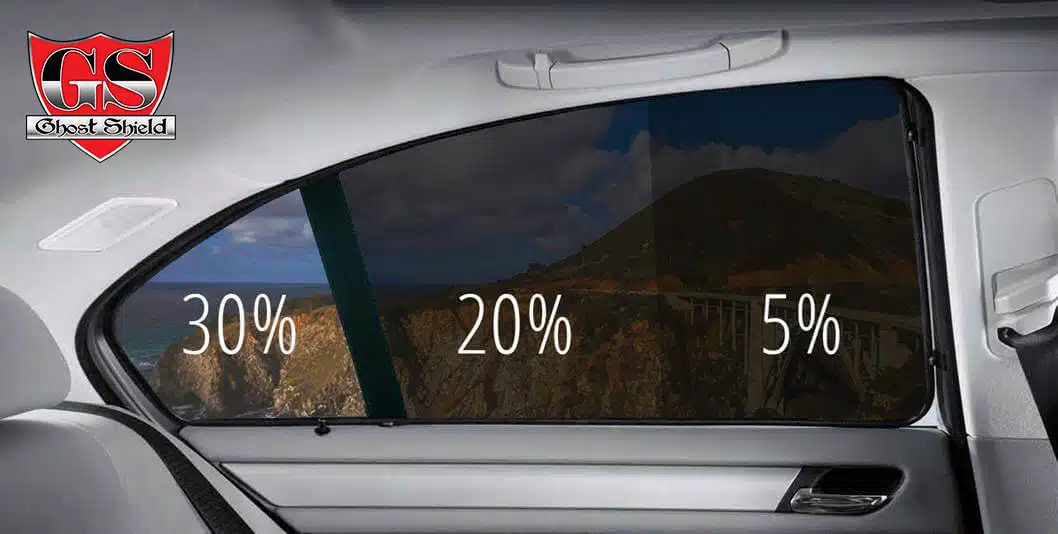
That will depend on what shade you choose. 5% limo tint will make it more challenging to see out of the vehicle at night. A 70% tint will make very little difference in nighttime visibility.
We do not recommend going past 30% on front door windows, as it will begin to drastically affect low nighttime visibility. To play safe, we say stay above 35%.
Which Tint is Best for You?
- Dyed Tint (Most Affordable Tint): If you’re on a budget and just want a simple, dark aesthetic for privacy without worrying too much about heat or UV protection, dyed tint is a good choice.
- Metallic Tint (Most Reflective Tint): A solid choice for those who want better heat rejection and UV protection than dyed tints and can tolerate the reflective surface. However, if you rely on electronic devices in your car, a metallic tint may not be the best choice.
- Ceramic Tint (Heat Rejection Tint): Best for those seeking the ultimate in heat and UV protection, without compromising on durability or signal interference. This is the top choice for people who want superior comfort, protection, and a high-end look, and are willing to pay more for it.
Ghost Shield offers a premium, high-performance solution for those seeking optimal heat rejection, UV protection, durability, and signal clarity. It delivers superior comfort, longevity, and aesthetic appeal, making it an excellent investment for long-term benefits. For anyone prioritizing quality, protection, and comfort, this ceramic tint stands out as a top choice.
Enhancing your vehicle with tinted windows is about comfort, protection, and performance. Dyed film provides a classic look and moderate UV protection for those looking for a budget-friendly solution.
However, for better heat rejection properties and improved durability, carbon tints offer a sleek, non-reflective finish and exceptional performance without compromising on visible light transmission or interfering with electronic devices.
Choosing the right window film can make a significant difference. From comparing types of tint to weighing the benefits of different window tint percentages, understanding the balance between visibility and protection is key.
High visible light transmission, such as a 70 percent tint, offers substantial heat rejection properties while maintaining a natural view. Options like 5 percent tints excel for those who prioritize privacy and blocking sunlight.
We take pride in offering only the highest quality window films so that your vehicle receives the best in UV protection, durability, and overall performance. Explore our range and experience the superior rejecting properties that set our products apart.
Check out our YouTube channel
FAQs for Window Tinting
Q: What is the best type of car window tint?
A: Ceramic tint is widely considered the best for heat rejection, UV protection, and clarity without interfering with electronic devices.
Q: How much does car window tinting cost?
A: Prices range from $100–$300 for dyed tint, $200–$500 for metallic, and $400–$800+ for ceramic, depending on vehicle size and number of windows.
Q: Is car window tinting legal in my state?
A: Tint laws vary. For example, California allows 70% tint on front windows, while rear windows may be darker. Always check local regulations.
Q: How long does car window tinting last?
A: With professional installation, high-quality films like ceramic can last 10+ years, often covered by a lifetime warranty.